

Quick answer
Yes. Atlantic bottlenose dolphins live in the waters around Hilton Head Island year-round, and watching them from public shorelines costs 0 USD. The waterways are open 00:00–23:59 daily, though sightings depend on light and tide rather than clock time. The recommended arrival window is 08:00–10:00, when feeding activity peaks and the water sits calmer.
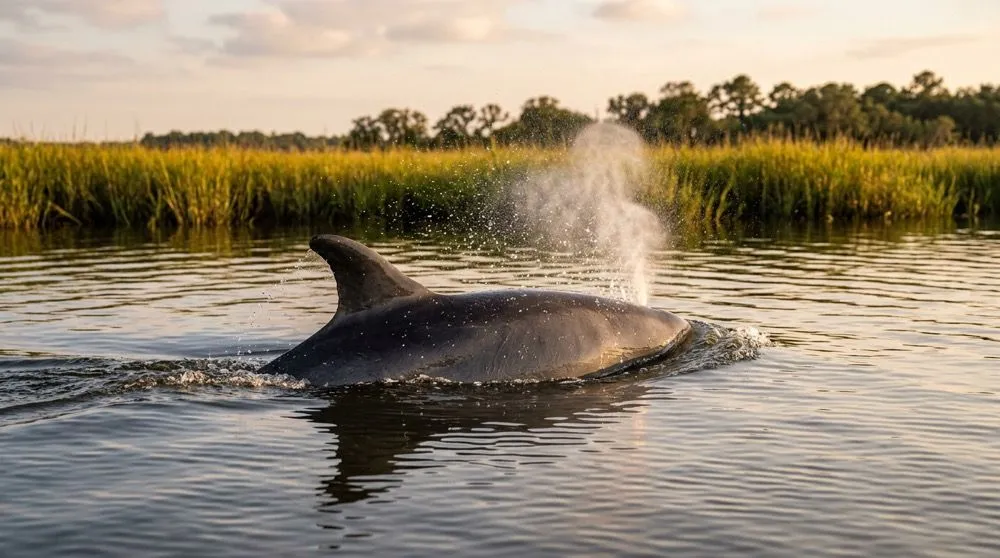
Some of the dolphins circling Hilton Head Island are not migratory visitors at all — researchers have tracked individual bottlenose here for decades, identifying them by nicks and scars along the dorsal fin. A smaller resident group works the tidal creeks behind the island, while others move between the sounds and the open Atlantic with the seasons. So the honest reply to are there dolphins in hilton head is less about presence than about probability: the animals are here, and the question is whether the water, the light and the hour line up on the morning a visitor chooses to look. Geography does most of the work. The island sits at the mouth of Port Royal Sound, with Calibogue Sound to the south and a lattice of salt marsh, spartina banks and tidal creeks threading behind the beaches. Mullet and shrimp funnel through these channels on the moving tide, and the dolphins follow. That is why sightings cluster near structure rather than open surf — the Broad Creek entrance, the waters off Harbour Town, the marsh edges near Pinckney Island, and the shipping channel near the Hilton Head lighthouse all concentrate fish and predators in the same narrow lanes. A Hilton Head dolphin tour exists precisely because those lanes are easier to reach by hull than on foot. What to do with the answer depends on ambition. Casual observers standing on a beach access or a dock at slack tide will often see fins within twenty minutes, particularly on the sound side where the water stays flatter. Visitors hoping to watch sustained feeding behaviour, or to see the marsh from the water, generally book a guided boat trip that runs the back creeks at a distance regulated by federal marine mammal rules. Either way, the practical advice is the same: go early, watch a fixed stretch of water rather than scanning, and give it time. Anyone still asking are there dolphins in hilton head after an hour on a quiet creek bank at first light is usually looking too hard and too fast — the fins surface briefly, without noise, often behind you. Binoculars help. Patience helps more. The island's wild dolphin watching rewards stillness in a way few coastal attractions do.
“The fins surface briefly, without noise, often behind you — binoculars help, patience helps more.”
When Are There Dolphins in Hilton Head: Best Times to Visit
The best arrival window for dolphin sightings in Hilton Head is 08:00–10:00, as these early morning hours align with active feeding times and calmer water conditions. While dolphins inhabit the local waterways year-round, selecting your timing based on tidal patterns and seasonal temperatures improves your probability of observation.
Spring (March–May)
Moderate crowdsMild 65°F–80°F; pleasant for boat travel.
Warmer waters bring more activity to the salt marshes.
Summer (June–August)
Heavy peak crowdsHot 85°F–90°F; frequent afternoon thunderstorms.
High activity levels, though morning excursions avoid midday heat.
Fall (September–November)
Low to moderate crowdsCooling 60°F–75°F; consistent conditions.
Dolphins remain active as water temperatures begin to decrease.
Weekday mornings
Minimal crowds—
Lower boat traffic creates less noise disturbance for dolphins.
Verdict: Plan your visit for weekday mornings between 08:00–10:00 during the months of April or October to experience optimal conditions.
Getting to Areas Where Are There Dolphins in Hilton Head
Hilton Head Island is located along the South Carolina coast and is primarily accessed via US-278. Visitors heading to marinas for dolphin viewing should navigate toward major hubs like Shelter Cove Harbour or Broad Creek.
US-278 onto the island
Palmetto Breeze Transit to Hilton Head
Intracoastal Waterway to local marinas
Interesting Facts: Are There Dolphins in Hilton Head Year-Round?
The Atlantic bottlenose dolphin is a permanent resident of the waters surrounding Hilton Head Island. These marine mammals exhibit unique behaviors shaped by the local tidal environment.
Strand feeding technique
Dolphins in this region are known to perform strand feeding, where they work together to herd fish onto mud banks and slide up to consume them. This cooperative behavior is rarely observed in other parts of the world.
Residency patterns
Research indicates that many bottlenose dolphins remain in the Hilton Head area year-round rather than migrating. These resident populations are highly adapted to the complex network of salt marshes and tidal creeks.
Tidal dependence
Dolphin movement is closely tied to tidal cycles, which dictate where prey species aggregate. These animals navigate the shallow estuaries with precision to maximize hunting efficiency during changing water levels.
Social structure
Local dolphins typically form fluid social groups known as pods. These groups change composition frequently as individuals interact for hunting, socializing, and protection.
Acoustic communication
Bottlenose dolphins utilize a sophisticated system of clicks, whistles, and pulsed sounds to communicate. Each individual develops a signature whistle that functions similarly to a name to identify themselves to others.
Echolocation capability
These animals use echolocation to navigate murky waters and locate prey. By emitting sound waves that bounce off objects, they create a detailed mental map of their surroundings.
Guidelines for When You See Dolphins in Hilton Head
The bottlenose dolphins around Hilton Head are wild animals protected under the Marine Mammal Protection Act, and how visitors behave on the water shapes whether they keep using these creeks. Feeding or crowding them carries federal penalties and teaches dolphins habits that shorten their lives.
Do
- Stay at least 50 yards away from any dolphin you spot
- Put engines in neutral if dolphins approach your boat
- Let dolphins set the distance and move away first
- Report injured or entangled dolphins to NOAA at 877-433-8299
- Photograph from the shore, dock, or a stationary vessel
- Keep groups small and voices low near marsh edges
Don't
- Never feed dolphins anything, including bait, scraps, or leftover catch
- Do not swim with, touch, or attempt to ride dolphins
- Avoid chasing, circling, or cutting across a pod's path
- Do not separate mothers from calves or split a group
- Skip flash photography and drones flown low over animals
- Never encourage strand feeding by approaching the mud banks
Check availability
Common Questions About Dolphins in Hilton Head
Everything you need to know about are there dolphins in hilton head